Growing businesses rarely fail because people are working hard enough. More often, they struggle because the systems that run finance, inventory, sales and purchasing do not talk to each other. Orders move in one tool, stock lives in another, and finance reconciles everything after the fact. Decisions arrive late — and sometimes based on numbers that were already outdated when they were shared.
An AI-native ERP approach addresses that structural problem. Instead of treating enterprise software as a collection of separate modules, it treats operations as a connected system: shared records, clearer ownership and practical automation where it reduces re-entry without removing human judgement.
The cost of disconnected systems
When inventory, sales and finance run in silos, everyday work becomes a chain of handoffs. A sales commitment may look healthy on a spreadsheet even when warehouse availability has already changed. Purchasing may reorder based on week-old figures. Finance may close the month with exceptions that operations already knew about days earlier.
Those gaps create familiar symptoms:
- Teams spend time reconciling the same facts across tools
- Stock mismatches appear only after customers or production feel the impact
- Managers chase status updates instead of reviewing a shared view
- Spreadsheets become the unofficial system of record
None of this requires dramatic failure to hurt. Small delays compound. People learn to work around the system — which makes governance harder, not easier. Over time, the organisation builds tribal knowledge about “how we really get numbers,” and that knowledge rarely travels cleanly when people change roles or sites.
What “AI-native” means in practical ERP terms
“AI-native” should not mean a flashy dashboard or unverified promises. In a practical ERP context, it means the platform is designed so connected data can support better decisions: highlighting exceptions, reducing repetitive updates and helping teams see operational patterns earlier.
The foundation still matters more than the label. Finance, inventory, sales and purchasing need one consistent picture of:
- What is available
- What has been committed
- What is in transit
- What has been billed or paid
- Where ownership sits when something needs attention
Once those workflows share the same operational spine, AI-assisted features become useful rather than decorative. Suggestions and alerts only help when the underlying numbers are trustworthy. Without that spine, AI simply accelerates confusion — surfacing the same inconsistent facts faster.
Connecting finance, inventory, sales and purchasing
A useful way to think about AI-native ERP is as a map of how work actually moves through the business.
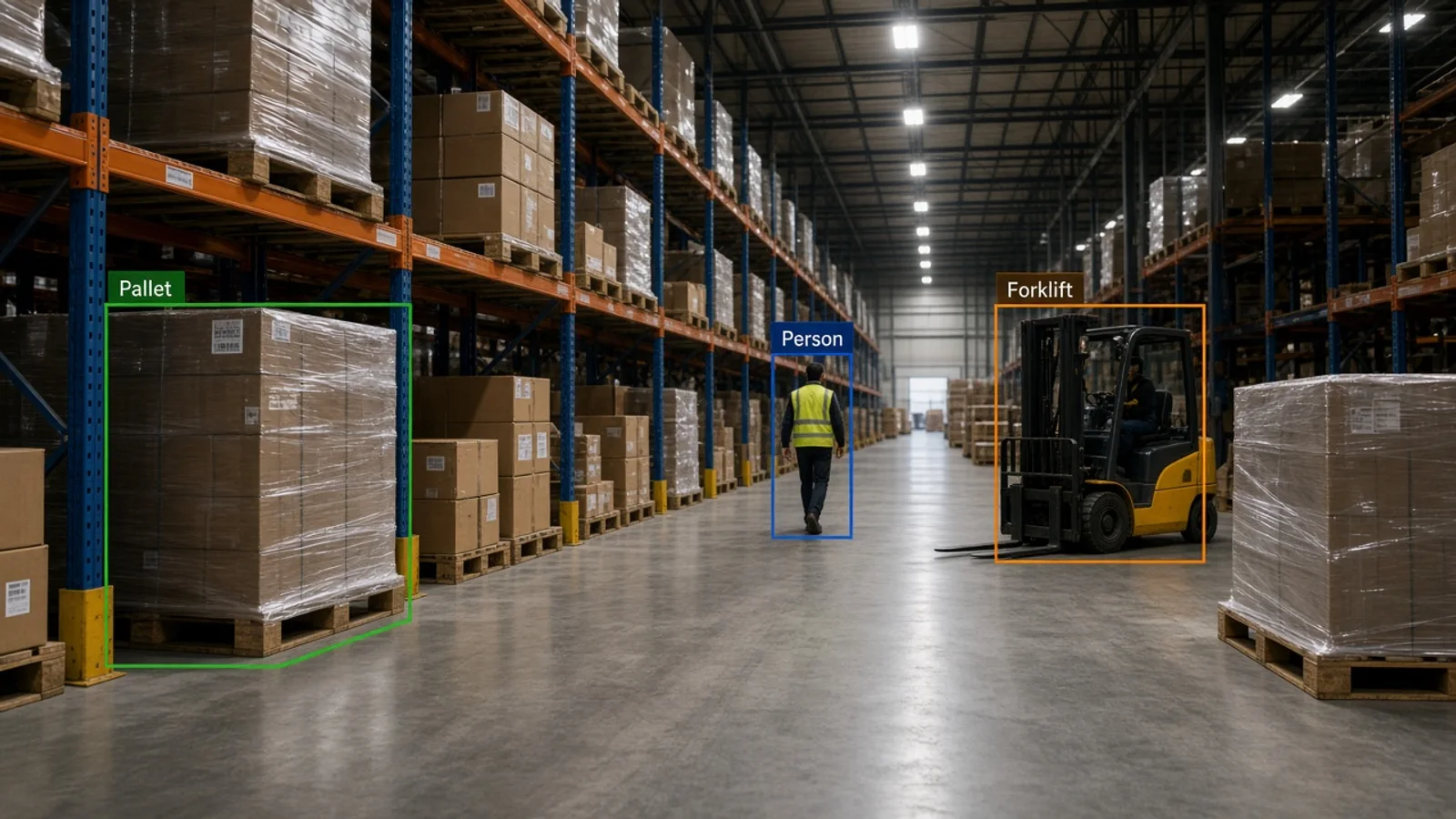
Inventory needs accurate movements and availability across locations — not just a static count. Sales needs to commit against reality, not optimism. Purchasing needs demand and lead-time context so replenishment is deliberate. Finance needs commercial activity that stays close to operational truth so reporting does not become archaeology.
When these processes connect:
- Stock and commercial activity stay aligned
- Procurement can respond to real demand signals
- Finance workflows reflect current trading more closely
- Operations teams spend less time reconstructing the story from email threads
Consider a typical order path. Sales confirms a line against available stock. Warehouse picks and ships against that commitment. Purchasing sees depletion and open demand. Finance invoices against fulfilment, not against an outdated quote. Each step still has owners and checks; what changes is that the shared record reduces the need to re-key the same commercial event into three systems.
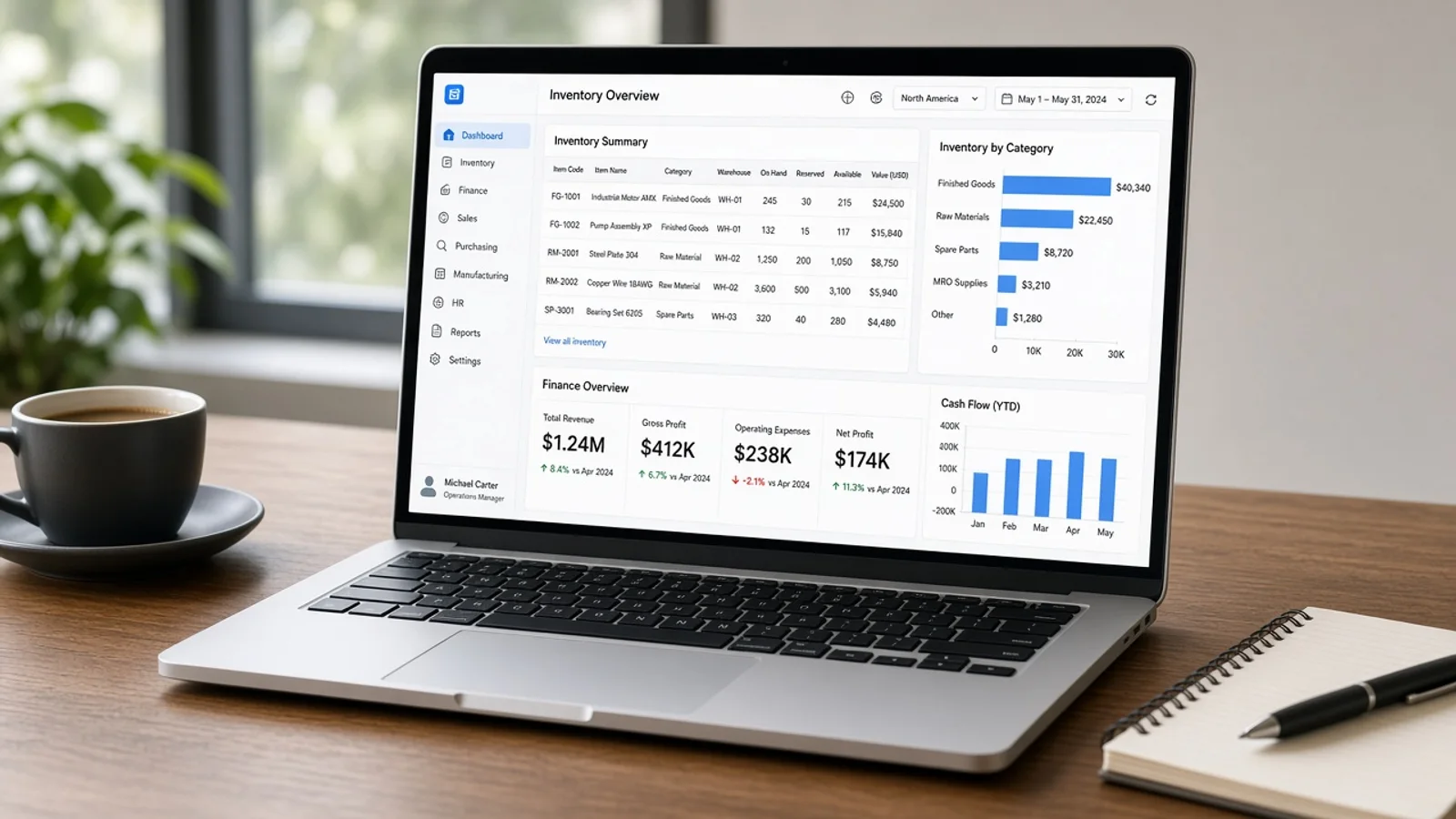
Digitalsofts positions AI-Native ERP around this connected view — inventory, finance and operations in one system shaped around how the business actually runs — rather than forcing teams to keep stitching tools together after every growth spurt.
Visibility, automation and decision support
Connected systems create three practical advantages for leadership and day-to-day teams.
Better visibility. Managers can review status without chasing multiple systems. Exceptions become visible earlier because they sit on shared records, not buried in personal spreadsheets.
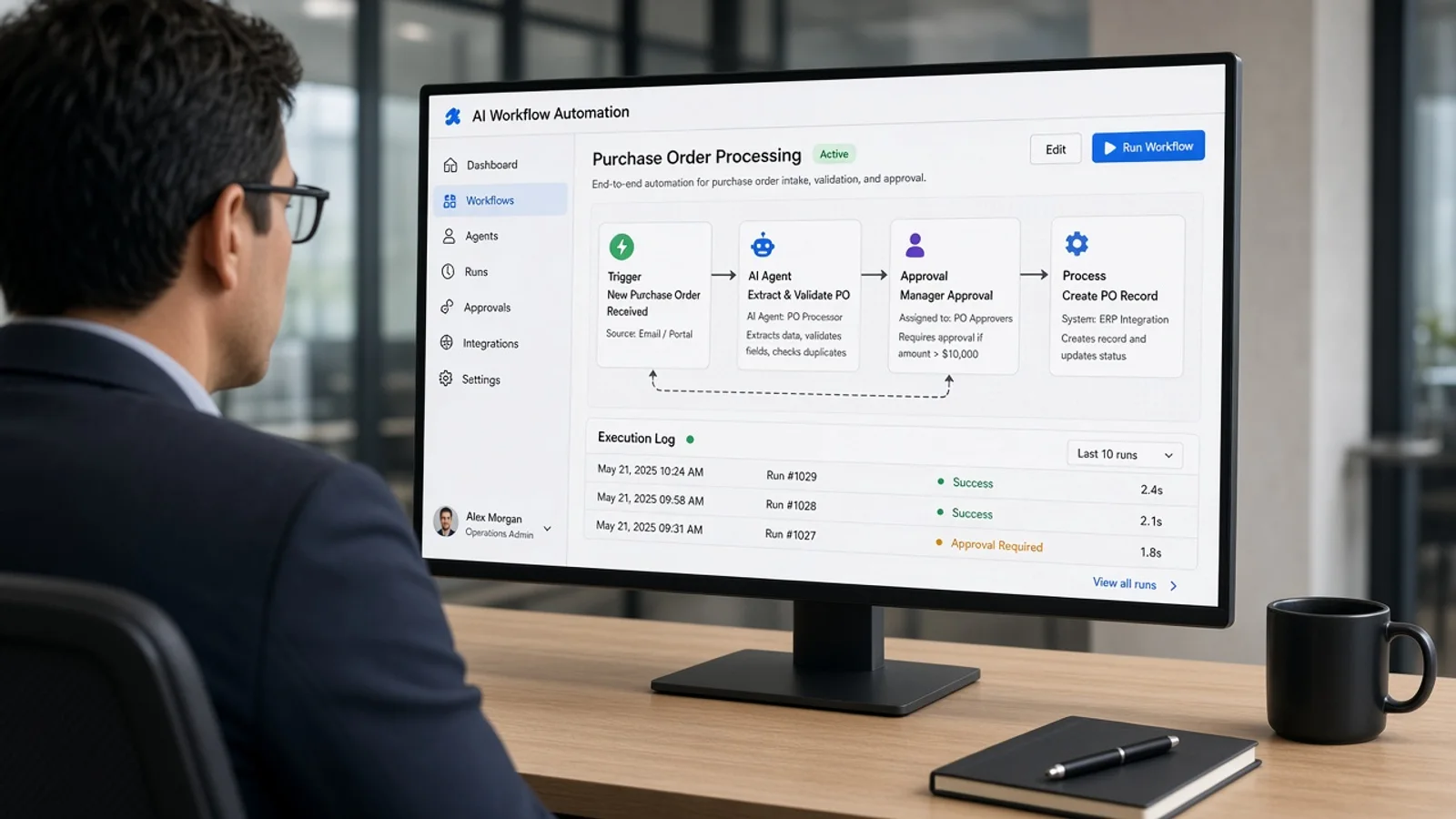
Practical automation. Repetitive updates, status checks and routine document flows can be reduced where rules are clear. Automation should shrink busywork — not remove accountability for exceptions that need judgement.
AI-assisted decision making. With cleaner operational data, teams can use assistance to surface anomalies, prioritise follow-ups and focus attention where it matters. The goal is clearer decisions, not replacing experienced operators.
In day-to-day terms, that might look like a purchasing queue ordered by risk of stock-out, a finance exception list that already includes the operational note, or a sales view that shows commitment risk before a promise is made. The value is focus: people spend judgement where judgement is needed.
Where organisations usually start
Teams evaluating ERP often ask where to begin without freezing the business. A practical sequence is to pick the handoffs that create the most re-entry, not the modules that sound most advanced.
Useful starting questions include:
- Where do stock and sales numbers diverge most often?
- Which purchasing decisions still depend on informal updates?
- What month-end exceptions would be obvious earlier if finance saw the same operational record?
- Which workarounds exist only because systems do not share ownership of a status?
Mapping those answers produces a short list of workflows to unify first. Many organisations begin with inventory and sales alignment, then tighten purchasing against demand, then bring finance closer to fulfilment and billing. Others begin with purchase-to-pay friction if supplier and invoice exceptions dominate the calendar. Either path works when it is driven by real operational pain rather than a feature checklist.
During transition, keep parallel workarounds time-boxed. If spreadsheets remain the unofficial ledger indefinitely, the ERP never becomes the system of record. Assign owners for master data, exception queues and cutover rules so the connected model has someone accountable for keeping it honest.
Governance that keeps connection useful
Connection without governance creates a different problem: everyone sees the same messy data. Define who can create, adjust and close critical records. Decide how corrections are documented. Agree which statuses mean “safe to act” for sales, warehouse and finance.
Clear ownership reduces the temptation to invent side channels when something looks wrong. It also makes AI-assisted prompts safer, because the system is highlighting exceptions against rules the organisation already accepts. Governance is not bureaucracy for its own sake; it is how a shared operational view stays credible over time.
A business takeaway
If your organisation still reconciles inventory, sales and finance through side channels, the issue is structural. Unifying those workflows does not require claiming overnight transformation. It requires a connected operational foundation, clear ownership and a willingness to retire workarounds that only exist because systems never spoke to each other.
For teams evaluating next steps, start with the handoffs that create the most re-entry and delay. Map where numbers diverge today. Then consider an ERP approach that treats connection as the product — with AI as a practical layer on top of reliable processes, not a substitute for them.
If you want to explore how a connected inventory, finance and operations model could fit your organisation, Digitalsofts can walk through the workflow map with your team and identify where a single operational view would reduce friction first.