Most enterprises already automate something. Invoice routing, password resets, stock alerts, scheduled reports — these are familiar and useful. Traditional automation follows predefined paths: when X happens, do Y. It works well when the path is stable and exceptions are rare.
Many operational bottlenecks are not that tidy. Approvals stall because context is missing. Status chasing eats skilled time. Work hops between ERP screens, email and spreadsheets. The process is repetitive, but not purely mechanical. That is where agentic AI becomes relevant — not as science fiction, but as a more capable layer for workflow coordination.
Traditional automation vs AI agents
Traditional automation is rule-bound and brittle by design. It shines when inputs are clean and outcomes are binary. It struggles when a step needs interpretation, when systems must be checked in sequence, or when an exception needs a structured handoff to a person.
An AI agent, in practical enterprise terms, is software that can:
- Understand a defined operational goal
- Coordinate steps across systems or data sources
- Take controlled actions within policy
- Escalate when judgement or approval is required
The difference is not “machines replacing people.” It is moving from single-step triggers to guided workflows that keep moving — with humans still owning sensitive decisions. Traditional bots stop when the happy path breaks. Agents are designed to gather missing context, attempt the next allowed step and escalate cleanly when policy says a person must decide.
Why repetitive workflows still need people
High-volume work such as follow-ups, status updates, purchase-order chasing and routine reconciliations consumes capacity. Teams often know the pattern by heart, yet still perform it manually because the next action depends on incomplete information.
Removing people from those loops entirely is usually the wrong goal. The better goal is reducing low-value repetition while protecting oversight:
- Agents prepare context and draft the next step
- Policies define what can proceed automatically
- Exceptions surface to the right role
- Auditability remains clear
When oversight is designed in, agentic workflows feel like operational support — not unsupervised risk. People remain accountable for credit decisions, policy exceptions, commercial commitments and anything that affects compliance or customer trust. Agents handle the gathering, sequencing and reminders that previously sat in inboxes.
Workflow orchestration and ERP integration
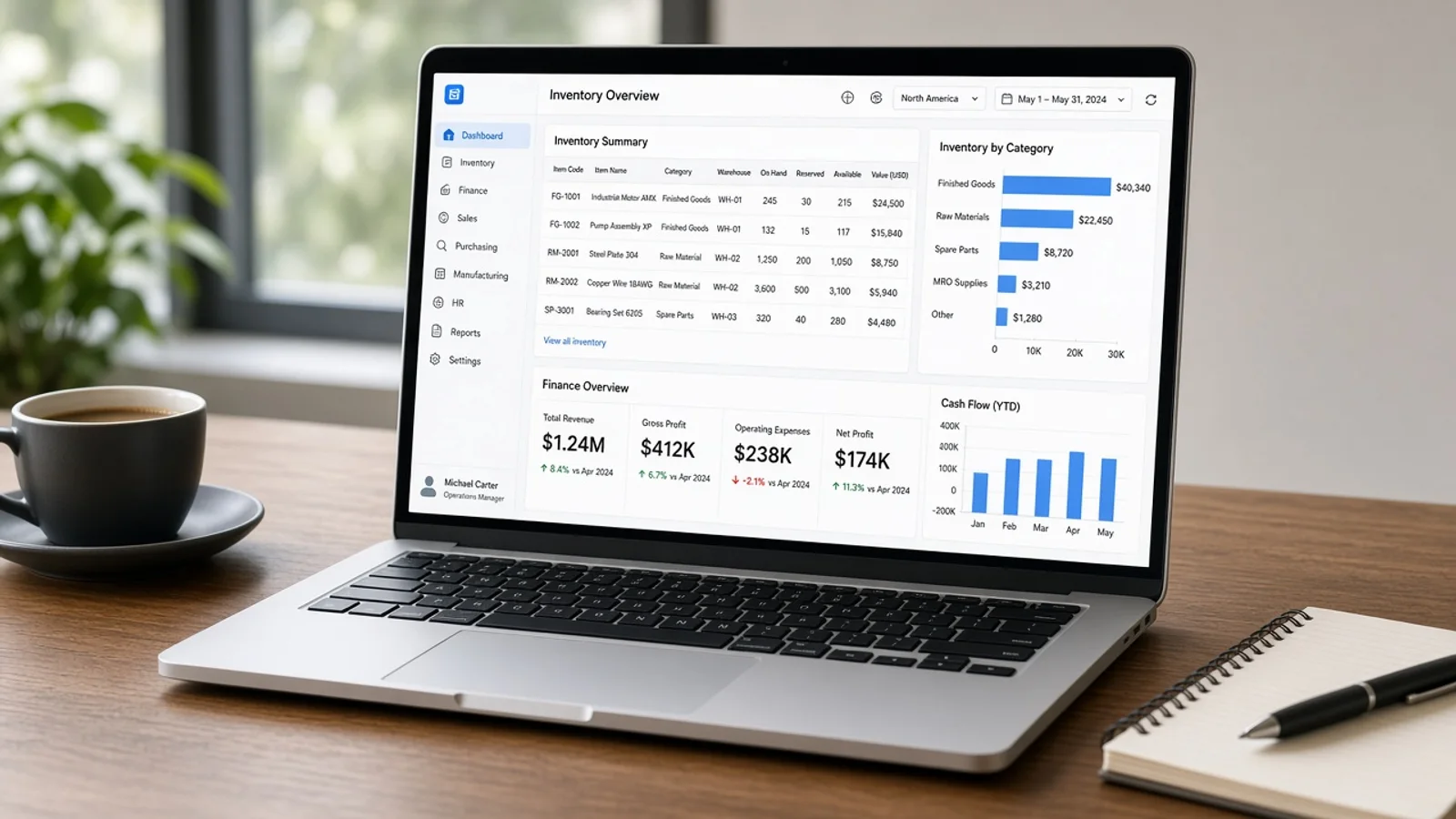
Agentic AI delivers more value when it is system-aware. In practice, that often means connecting to ERP and related operational tools so agents work with the same records teams already trust.
Useful orchestration patterns include:
- Gathering status from multiple steps before notifying a manager
- Advancing routine document flows when conditions are met
- Flagging stalled items with enough context to act
- Coordinating handoffs between purchasing, finance and fulfilment
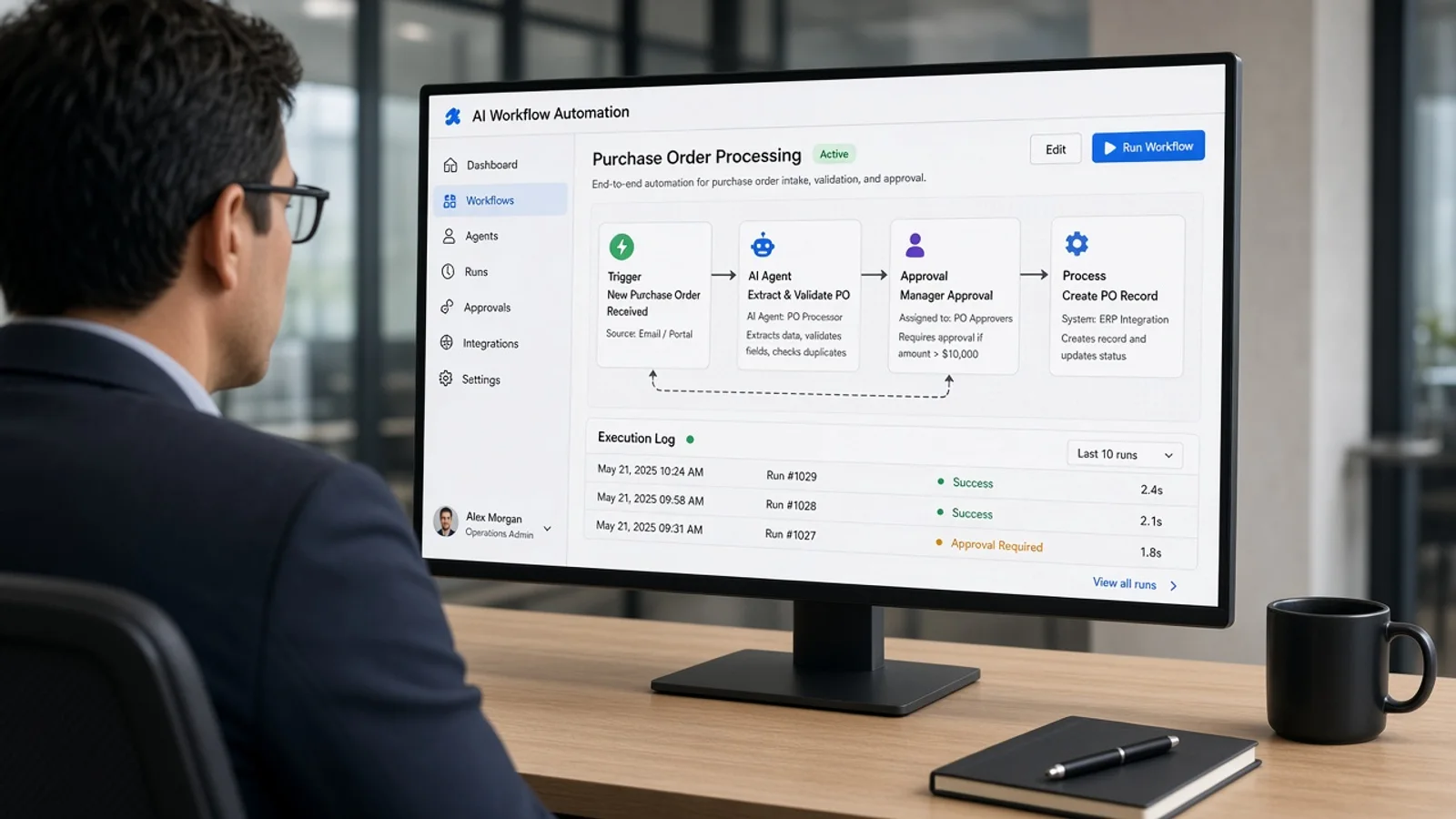
Without that integration, agents become another channel that asks people for updates they must still look up manually. With it, an agent can check open purchase orders, receipt status and approval state before interrupting anyone. Digitalsofts positions Agentic AI around this kind of governed automation: workflow agents aligned to business rules, less manual status chasing and human oversight where judgement is required. The emphasis is practical enterprise use — not experimental theatre.
Practical enterprise use cases
Agentic approaches tend to fit best where volume is high, rules are mostly clear and delays are expensive:
Approvals and follow-ups. Agents can assemble the packet, check prerequisites and only interrupt people when a decision is truly needed.
Operational status chasing. Instead of pinging three teams for the same update, an agent can compile a current picture from connected systems.
Repetitive ERP tasks. Copy-paste updates and routine record maintenance can be reduced when agents operate inside defined boundaries.
Cross-team coordination. When work spans sales, inventory and finance, orchestration helps keep ownership visible and next actions explicit.
Each use case still needs design: identify the work, define agent behaviour, set escalation paths and refine from real operational feedback. A purchase-order follow-up flow, for example, might allow automatic reminders when a supplier acknowledgement is overdue, but require a buyer to decide before changing dates or cancelling a line. That boundary is the difference between helpful orchestration and uncontrolled change.
Designing governance before scale
Organisations that struggle with agentic projects usually skip design and jump to demos. A more durable approach defines policy first:
- Which actions can proceed without a person?
- Which actions need approval, and from which role?
- What evidence must be logged for later review?
- How do agents stop safely when systems disagree or data is incomplete?
Write those answers into operating rules, not only into project slides. Then pilot on one workflow with clear success criteria: fewer stalled items, clearer handoffs, shorter time to a human decision when one is required. Expand only after the escalation paths feel trustworthy to the people who own the process.
Governance also includes data boundaries. Agents should access the systems and fields needed for the job — not every record in the estate. Least-privilege access, role-aware escalation and clear retention of agent actions make audits simpler and reduce the blast radius of mistakes.
Measuring progress without inventing claims
Avoid framing success as vague “intelligence” or unsupported efficiency percentages. Prefer operational measures teams already understand: number of status chases avoided, cycle time from request to decision, exception volume that still needs human review and how often agents escalate correctly versus incorrectly.
Those measures keep the conversation honest. If escalations are noisy, tighten thresholds. If agents stall too often, improve system connectivity or clarify the goal. Continuous refinement is normal; agentic workflows are operating systems, not one-time installs.
A business takeaway
Agentic AI is not a replacement for process discipline. It amplifies good process design and exposes weak process design quickly. Organisations that succeed treat agents as participants in a governed workflow — with clear goals, system integration and human checkpoints.
If your teams spend too much skilled time on repetitive coordination, start by listing the loops that stall most often. Ask which steps are rule-based, which need judgement and which systems already hold the truth. That map is the beginning of intelligent workflow design.
Digitalsofts can help teams explore agentic workflows in a controlled way — identifying high-volume work, designing oversight and connecting agents to the tools operations already use.